
For centuries, man has been living alongside nature until the modern era. The advent of industrialisation has conformed us to be less dependent on nature creating a rift, thus resulting in a sense of disconnection. Most of us fail to realise that all species are interdependent on one another and contribute to the web of life. Nothing in this world can survive alone. Even the microscopic single-celled bacteria has a part to play in the survival of the highest evolved species, man. This is the underlying theme in the 2007 movie Bee Movie.
In this movie, when the protagonist, a bee named Barry B. Benson graduates from college, he finds that he will have only one job in the hive for his entire life. Absolutely disappointed in facing a life of monotony, he wishes to see what lies outside the hive. The only way out is by joining a team, conveniently called pollen jocks, responsible in honey collection and pollination of flowers. This results in him venturing the city of New York, where (after some incidents) he is saved by the florist Vanessa from her ill-tempered boyfriend and he breaks the bee law (never to talk to humans) in order to thank Vanessa.

Source – Google images
Barry and Vanessa become friends. The plot of the story further develops when Barry discovers that humans exploit bees to sell the honey that the bees collect with utmost hardship.
Bee Movie at first seems to illustrate a real need for bifurcation, with any interaction between humans and nature—in this case bees—not only advised against but outlawed. Jane Lamacraft notes that “the contrast between the hive, humming with contented collaborative endeavor, and the competitive, stressed-out human world, makes you agree with Barry: “No wonder we’re not supposed to talk to them. They’re insane!”. And Barry’s interaction with humans reveals a shocking revelation: humans are stealing honey from bees for a profit, so Barry takes them to court, suing the human race for their exploitation of all bees. Bee Movie asserts that bees and humans have an interdependant relationship to survive, either individually as represented by Barry’s relationship with Vanessa, or collectively, as illustrated by the drastic loss of plant life when bees go on strike, refusing to pollinate and thus regenerate flowers and other plants around the world.

Source – Google images
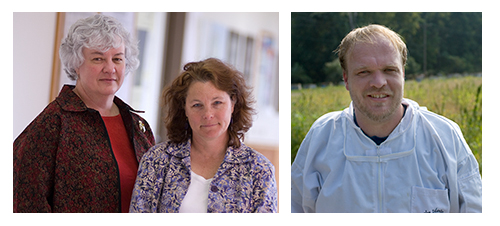
There is no doubt that bee populations are decreasing rapidly and that their annihilation would have a devastating effect on agriculture. According to Diana Cox-Foster and Dennis vanEnglesdorp’s March 31, 2009 article in Scientific American, in 2007, due to Colony Collapse Disorder (CCD), “a fourth of U.S. beekeepers had suffered … losses and … more than 30 percent of all colonies had died. The next winter the die-off resumed and expanded, hitting 36 percent of U.S. beekeepers. Reports of large losses also surfaced from Australia, Brazil, Canada, China, Europe and other regions.” These losses may be catastrophic for farmers, Cox-Foster and VanEnglesdorp explain, “Because one third of the world’s agricultural production depends on the European honeybee, Apis mellifera, the kind universally adopted by beekeepers in Western countries.” Loss of bees, then, would deplete agricultural products that benefit humans. But because these bees also pollinate other plant species, their depletion could have widespread effects on a biotic community, destroying whole species of flora.
Source – Pennstatenews.com
Researchers see human factors contributing to this loss of bees. Cox-Foster and VanEnglesdorp cite poor nutrition, pesticide exposure, stress-related viruses, and fungicides as factors influencing colony collapse. In order to slow the collapse of bee colonies and ensure agricultural pollination, Cox-Foster and VanEnglesdorp assert that beekeepers need to act quickly to minimize disease and ensure good nutrition and less exposure to pesticides for their bee colonies. Farmers too should decrease their use of harmful pesticides and herbicides, so bees can survive and help maintain a food supply for both humans and bees.
Bee Movie illustrates just a glimpse of what the lack of pollination might cause, not because bee colonies have been destroyed by human farming techniques but because bees go on strike. By elucidating this connection between bees and humans, the film also reinforces the need for interdependent relationships between humans and bees, relationships that draw on both organismic and chaotic approaches to ecology. The film tells this tale of interconnection between human and non-human nature through the eyes of Barry.
The movie also demolishes the general notion that everything in this planet has been created for prioritized consumption by man. This is implied in the opening argument lines of the lawyer of the honey companies that “it is a man’s divine right to benefit from the bounty of nature God put before us”. This concept presupposes that creations other than man have only a passive role in the maintenance of equilibrium of life in nature. Vanessa stands as a contradiction to the lawyer when she tells her tennis friend, Ken “why does a bee’s life have less value than a human life?”. The reality is that mankind’s survival itself would be under threat if he remains oblivious to the contribution of other creatures in the maintenance of a harmonious ecological equilibrium. This point has been made crystal clear in this movie. No bees mean no pollination, no vegetables, no fruits and ultimately no food for living beings to consume and survive.
The movie is a great eye-opener to those who neglect the cycle of nature. Life on this earth can never be linear. Everything is a participant in the circle of life. In nature an unexpected action or behaviour of one species may lead to disastrous consequences for many other species. Nothing can stand alone. A loose and carelessly placed stone will result in the crumbling of the pyramid. We need each other for a harmonious co-existence.


















 therambler.news.blog