Interdependence is necessary – Bee Movie

For centuries, man has been living alongside nature until the modern era. The advent of industrialisation has conformed us to be less dependent on nature creating a rift, thus resulting in a sense of disconnection. Most of us fail to realise that all species are interdependent on one another and contribute to the web of life. Nothing in this world can survive alone. Even the microscopic single-celled bacteria has a part to play in the survival of the highest evolved species, man. This is the underlying theme in the 2007 movie Bee Movie.

In this movie, when the protagonist, a bee named Barry B. Benson graduates from college, he finds that he will have only one job in the hive for his entire life. Absolutely disappointed in facing a life of monotony, he wishes to see what lies outside the hive. The only way out is by joining a team, conveniently called pollen jocks, responsible in honey collection and pollination of flowers. This results in him venturing the city of New York, where (after some incidents) he is saved by the florist Vanessa from her ill-tempered boyfriend and he breaks the bee law (never to talk to humans) in order to thank Vanessa.

Barry and Vanessa
Source – Google images

Barry and Vanessa become friends. The plot of the story further develops when Barry discovers that humans exploit bees to sell the honey that the bees collect with utmost hardship.

Bee Movie at first seems to illustrate a real need for bifurcation, with any interaction between humans and nature—in this case bees—not only advised against but outlawed. Jane Lamacraft notes that “the contrast between the hive, humming with contented collaborative endeavor, and the competitive, stressed-out human world, makes you agree with Barry: “No wonder we’re not supposed to talk to them. They’re insane!”. And Barry’s interaction with humans reveals a shocking revelation: humans are stealing honey from bees for a profit, so Barry takes them to court, suing the human race for their exploitation of all bees. Bee Movie asserts that bees and humans have an interdependant relationship to survive, either individually as represented by Barry’s relationship with Vanessa, or collectively, as illustrated by the drastic loss of plant life when bees go on strike, refusing to pollinate and thus regenerate flowers and other plants around the world.

Plants and trees begin to die without the bees
Source – Google images

There is no doubt that bee populations are decreasing rapidly and that their annihilation would have a devastating effect on agriculture. According to Diana Cox-Foster and Dennis vanEnglesdorp’s March 31, 2009 article in Scientific American, in 2007, due to Colony Collapse Disorder (CCD), “a fourth of U.S. beekeepers had suffered … losses and … more than 30 percent of all colonies had died. The next winter the die-off resumed and expanded, hitting 36 percent of U.S. beekeepers. Reports of large losses also surfaced from Australia, Brazil, Canada, China, Europe and other regions.” These losses may be catastrophic for farmers, Cox-Foster and VanEnglesdorp explain, “Because one third of the world’s agricultural production depends on the European honeybee, Apis mellifera, the kind universally adopted by beekeepers in Western countries.” Loss of bees, then, would deplete agricultural products that benefit humans. But because these bees also pollinate other plant species, their depletion could have widespread effects on a biotic community, destroying whole species of flora.

Cox-Foster and VanEnglesdorp
Source – Pennstatenews.com

Researchers see human factors contributing to this loss of bees. Cox-Foster and VanEnglesdorp cite poor nutrition, pesticide exposure, stress-related viruses, and fungicides as factors influencing colony collapse. In order to slow the collapse of bee colonies and ensure agricultural pollination, Cox-Foster and VanEnglesdorp assert that beekeepers need to act quickly to minimize disease and ensure good nutrition and less exposure to pesticides for their bee colonies. Farmers too should decrease their use of harmful pesticides and herbicides, so bees can survive and help maintain a food supply for both humans and bees.

Bee Movie illustrates just a glimpse of what the lack of pollination might cause, not because bee colonies have been destroyed by human farming techniques but because bees go on strike. By elucidating this connection between bees and humans, the film also reinforces the need for interdependent relationships between humans and bees, relationships that draw on both organismic and chaotic approaches to ecology. The film tells this tale of interconnection between human and non-human nature through the eyes of Barry.

The movie also demolishes the general notion that everything in this planet has been created for prioritized consumption by man. This is implied in the opening argument lines of the lawyer of the honey companies that “it is a man’s divine right to benefit from the bounty of nature God put before us”. This concept presupposes that creations other than man have only a passive role in the maintenance of equilibrium of life in nature. Vanessa stands as a contradiction to the lawyer when she tells her tennis friend, Ken “why does a bee’s life have less value than a human life?”. The reality is that mankind’s survival itself would be under threat if he remains oblivious to the contribution of other creatures in the maintenance of a harmonious ecological equilibrium. This point has been made crystal clear in this movie. No bees mean no pollination, no vegetables, no fruits and ultimately no food for living beings to consume and survive.

The movie is a great eye-opener to those who neglect the cycle of nature. Life on this earth can never be linear. Everything is a participant in the circle of life. In nature an unexpected action or behaviour of one species may lead to disastrous consequences for many other species. Nothing can stand alone. A loose and carelessly placed stone will result in the crumbling of the pyramid. We need each other for a harmonious co-existence.

A Look into the Series ‘Under the Dome’

This is my personal take on the series, Under the Dome. You are free to agree or disagree with me. Let me know in the comment section below.

Warning – Spoiler alerts for those who are yet to watch this show. Don’t say I didn’t warn you.

Source : Google Images

Under The Dome, the Netflix drama series based on the bestselling Stephen King novel of the same name, is a must-watch for anyone interested in Sci-fi shows. With only three Seasons, the show has managed to capture the attention of viewers, who have mixed reactions about it. The show was only meant to run for one season, but later extends up to three. Although it is a short series, compared to the other shows, it nevertheless manages to pack a lot of action and mystery. You can either hate it or love it, but you cannot stop watching this show without seeking answers for several mysteries and questions this show poses.

As the name suggests, the fictional town of Chester’s Mill is one day trapped under an invisible dome, which cuts them off from the rest of the world. No one can get in and no one can get out of this dome. The dome cuts houses in half, downs power lines, crushes cars that can’t see it, and most effectively and gruesomely, cuts a cow completely in half. The dome’s presence is known only when you touch it, which gives off a slight electric shock – enough to warn you but not to kill you.

A few of the lead characters touching the dome
Source : Google Images

The reason behind the dome is unknown and the citizens of the town are left stranded, with food, water and other resources running low. The citizens of the dome fend for themselves, with little to no help from the outside world.

As the show progresses, we see chaos happening within the dome. It turns into a dystopian society where violence, crime and other vices begin to rear their ugly heads. Certain characters try to bring about a sense of order, but it usually ends in vain.

The Egg
Source : Google Images

The government approaches the dome’s citizens, looking for a mysterious egg, with very little concern about the people trapped under the dome. This egg later becomes the centre of the story and it is the catalyst for a lot of the action. The plot thickens and unravels as the show progresses, and it shows no sign of slowing down.

The characters are well-written and they all have their own past and role in the storyline. We see the lives of the characters interconnect into a tangled web and it is interesting to watch their development. The character of Julia Shumway, magnificently portrayed by Rachelle Lefevre, is a strong woman character that stands out from the rest.

The citizens of Chester’s Mill.
Source : Google Images

The show has all the characters that are required in a good story – a Villain (Big Jim), a smart kid (Joe McAlister), a rebel (Norrie), a waitress who wants to see the world (Angie), a goody man with a dark past (Barbie), a never back down kind of a woman (Julia), a gay couple (Carolyn and Dr. Alice), a drunk with dark secrets (Sam), the kid with family issues (Junior), random high school kids, sheriff, and every other kind of character you can think of. It is an interesting mix and each character contributes something to the main storyline. The show focuses on the tales of the interconnected lives of a large cast of everyday small-town Americans. The show is shot beautifully, with great care given to the details in the setting and angles. The effects are stellar, and never fail to draw the viewer in and leave us on the edge of our seat.

The thought that ran through my mind when I first started watching this show, I’m sure most of you would agree with me, was to immediately think of The Simpsons Movie where the citizens of Springfield are all stuck under a similar dome.

The dome in The Simpsons Movie vs the dome in Under the Dome.
Source : Google Images

The book Under the Dome was published in 2009 and The Simpsons Movie was released in 2007. It may seem like Stephen King’s version is the copy, and he thwarts these rumours by saying, “I have never seen the movie,” King replies on his website, “and the similarity came as a complete surprise to me.” But it doesn’t matter, he argues, because unless there is outright plagiarism, “stories can no more be alike than snowflakes. The reason is simple: no two imaginations are exactly alike.”

Stephen King’s book Under the Dome (2009)
Source : Google Images

Although the storyline and a few elements may seem similar, there are a few contrasts between the two – mainly the origin of the dome. While the dome in ‘The Simpsons Movie’ is put down as quarantine by the USA government, the dome in ‘Under the Dome’ is caused by aliens.  

Whether it is for its stellar cast, or your love for sci-fi disaster shows, Under the Dome is a show that deserves a spot on your watch-list. It can also be a fun watch, where you can compare between the series and the Simpsons movie. Whatever your reason may be, this show is definitely a must-watch for all those who are a fan of Stephen King and Sci-fi alike. With a stack of movies in his arsenal, Stephen King repeatedly enthrals his audience. And when has Stephen King ever truly disappointed us?

Netflix’s Typewriter : Hit or Flop?

This is my personal take on the Netflix series, Typewriter. You are free to agree or disagree with me. Let me know in the comment section below.
Warning – Spoiler alerts for those who are yet to watch this show. Don’t say I didn’t warn you.

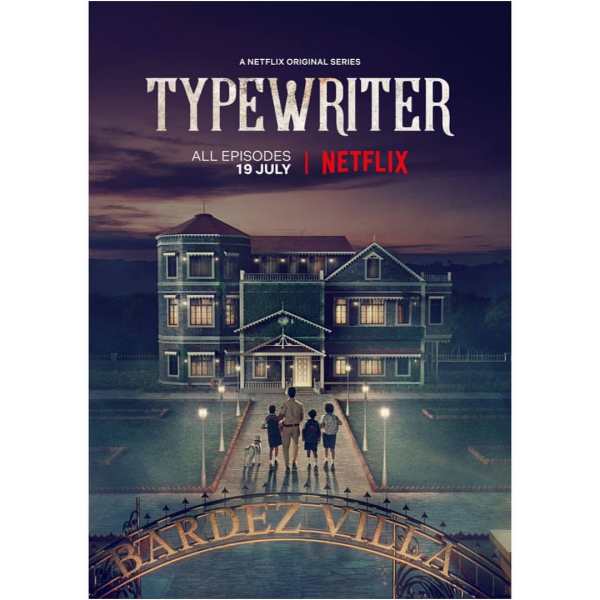
Source – Google Images

Sujoy Ghosh’s first horror venture into Netflix with the much hyped series, Typewriter is a different tale from all the other horror series of India. Even though the series is categorized under the horror genre, it is not purely horror.  It’s more like a mellow cross between horror and thriller that even kids wouldn’t have a problem watching.

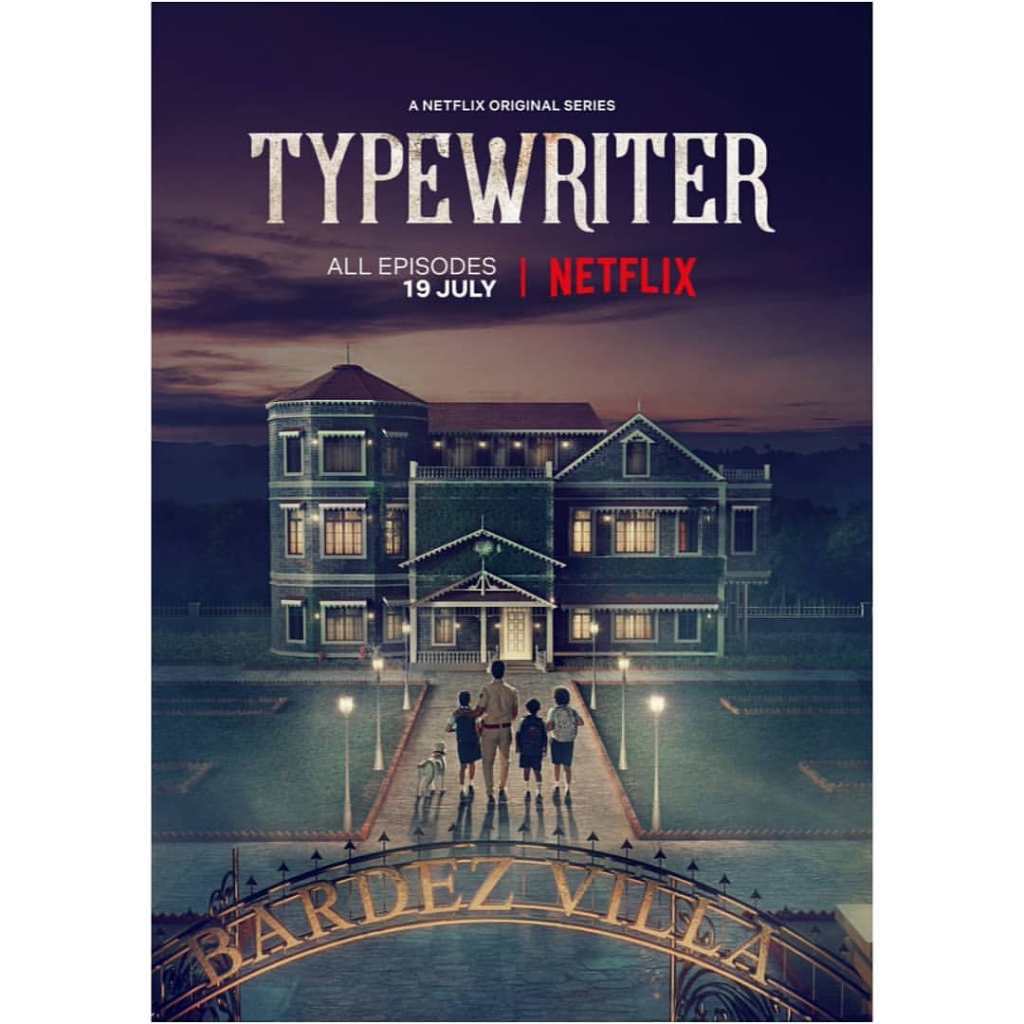
The story is set in the quaint district of Bardez in Goa. Even though the show is only 5 episodes long, it packs a lot of details, back-stories and twists. The pilot begins in the 1980s when Madhav Matthews, a prolific ghost story writer is found dead in his house, Bardez Villa. Decades later, Jenny, Madhav Matthews’ granddaughter, moves into the villa with her husband and kids. Jenny has forgotten Bardez Villa’s occult past but the locals remember it.

Bardez Villa
Source – Google Images

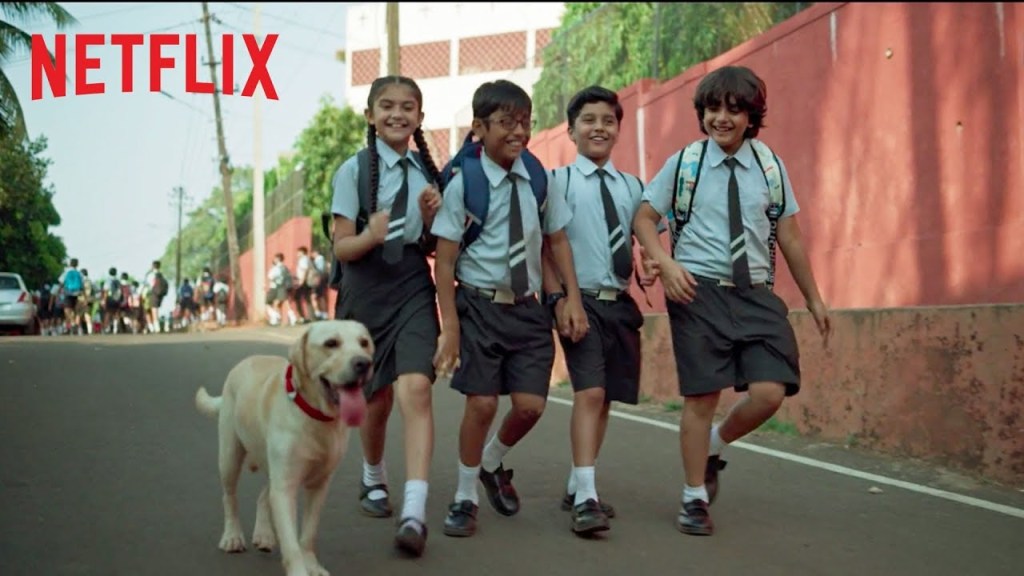
A group of kids, who call themselves The Ghost Club, living in Goa are on a Ghost hunt. The four member group, including their dog, occasionally skip school to read The Ghost of Sultanpore by Madhav Matthews and discuss paranormal matters.

The Ghost of Sultanpore book
Source – Google Images

They set their eyes upon the spooky looking Bardez Villa and befriend the new occupants of the house, Jenny and her family, so as to get closer to the mysterious house. The plot finds its centre in an old typewriter that the ghost now resides in. The story unfolds as the children find out the horrific details of the past and the present – spooky murders and a shape-shifting ghost living within the house.

The series has the classic horror elements like the blood moon, eerie apparitions, mysterious deaths, strange sounds at late hours – in this case the clickety-clack of the typewriter, nightmares etc., and doesn’t set this apart from the other shows of the genre, but it does carry its own beauty. Unlike most ghost stories where the ghost only shows up after dark, this shape-shifting ghost can move freely under the sun, which makes its presence unpredictable to a point where the viewer finds it difficult to differentiate between the real and fake Jenny. It is also interesting to know that the ghost can only take the form of Jenny and no one else.

For all the die-hard horror fans, this show might fail to send chills down your spine. But there are a few elements that put you on the edge. The pilot scene where Jenny complains to her grandfather about a person in her room is quite chilling. To see two Jenny’s – one on the bed and one under the bed is quite scary if you think about it. The series kicks off with a good spooky beginning, but it does get a bit predictable in its later episodes. Nevertheless there is never a dull moment in this show.

Every time the typewriter goes clickety-clack, it spells a sense of foreboding. When Jenny types “Bhoot is jhooth” (which translates as “Ghosts are lies”), it figures out a way to respond, on it’s own accord, with “Ghost is not fiction.”

The Possessed Typewriter
Source – Google Images

Another chilling scene is where the Fakeer collects spirits and keeps them in his house. The viewer must have thought the Fakeer was living with a group of people, up until it was revealed that the policewoman couldn’t see them because they were spirits and not real people. I should also include the scene where Sam sees, through her window, Jenny (the ghost version) waving at her and asking her to step out of the house. Sam backs away from the window in fear, only to find out that Jenny is behind her.

The Fakeer’s spirit living within the typewriter reminds me of this other horror movie called Mirrors, where the spirit moves into the object that is closest to it during it’s time of death. There is also a similarity between The Ghost Club and Enid Blyton’s Famous Five book series, where there are a group of kids and a dog who go on various adventures.

Members of The Ghost Club
Source – Google Images

Sujoy Ghosh did mention in one of his interviews that he has always been a fan of Enid Blyton’s works, and it isn’t surprising to see her writing style influencing his work.

The show is brilliantly shot for most part. A couple of jump scares actually have the impact they intend to create, often leaving you uncomfortable and at the edge of your seat. At no point in the show do you actually feel bored or disinterested. Sujoy Ghosh does a great job of adding just the right amount of darkness and mild humour. Each character has its own life and thought processes, which make the characters impressively believable. The performance of the actors must be applauded as well.

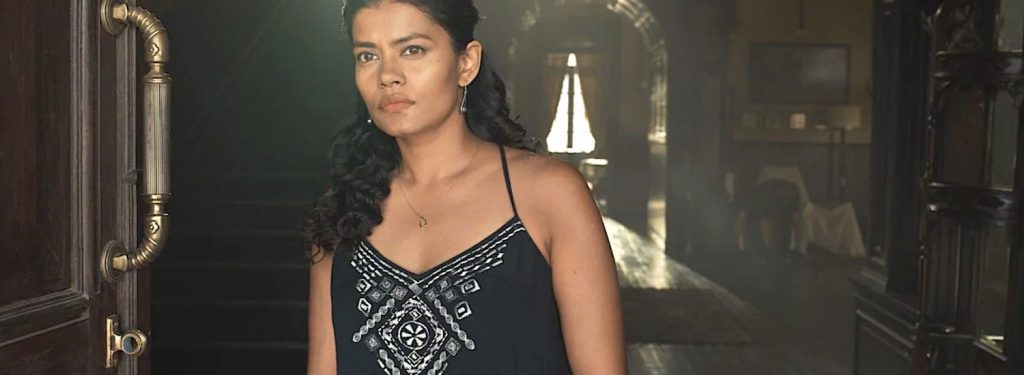
Jenny played by Palomi Ghosh
Source – Google Images

Jenny, played by Palomi Ghosh, stands out amongst the others and her role as a hateful, violent ghost as well as that of a confused young woman who is broken by the sadness of her past is excellent. Another actor who portrays her character well is Aarna Sharma (Sam), who manages to capture both the naive side of a kid and the logical brave side of a top detective. She is just as headstrong as her police dad, and refuses to give up until she uncovers the truth. Sam closely resembles the tomboyish Georgina from Famous Five. I also personally think the opening sequence of the series with the typewriter keys is gorgeously done.

Every action or detail beautifully interconnects and links in a chain that culminates in the following episodes. The only odd and unnecessary element in the series is Jenny’s husband who has debts and an extramarital affair. This adds no value or is in no way connected to the main story, and in fact we hardly see his character playing any major part in the story. If there is a chance of a season 2, the husband’s other life may come to light and we might get answers regarding the blood-stained shirt that he takes out of his bag. This one action might affect the life of the characters or the story in some way.

The series ends with a few loose ends like the reason why Jenny doesn’t remember about her past in Bardez Villa, will Sam ever see her mother, the Fakeer’s childhood, the Jenny who hugs her husband in the end vanishes into thin air – so does it mean that the Fakeer can still morph into Jenny, the writing and publishing of Ghost of Sultanpore, what does the bloody shirt that Jenny’s husband take out of his bag indicate? A lot of unanswered questions and the series ends with the typewriter getting fixed after Amit, the Fakeer’s son, offered his soul to the typewriter. So does it mean that the Fakeer will be back and who will be his next host body? It does look like the kids efforts to vanquish the ghost ends in vain. We might get answers to these questions if they decide to make a season 2 to this series or the series could just end with this cliffhanger. All we can do is wait and watch.

The cast of Typewriter
Source – Google Images

The horror genre in India still has a long way to go in terms of catching up with its Hollywood versions. Nevertheless, typewriter does stand out in its own way and it’s worth a watch. Call me weak-hearted, but personally, there were scenes which made me jump and made me feel uneasy for the next couple of days.

What are your theories regarding all the unanswered questions in this series? Comment below and let me know what you think of this series.

P.S There’s someone looking through your window, The Rambler

Blog at WordPress.com.

Up ↑

Design a site like this with WordPress.com
Get started