Interdependence is necessary – Bee Movie

For centuries, man has been living alongside nature until the modern era. The advent of industrialisation has conformed us to be less dependent on nature creating a rift, thus resulting in a sense of disconnection. Most of us fail to realise that all species are interdependent on one another and contribute to the web of life. Nothing in this world can survive alone. Even the microscopic single-celled bacteria has a part to play in the survival of the highest evolved species, man. This is the underlying theme in the 2007 movie Bee Movie.

In this movie, when the protagonist, a bee named Barry B. Benson graduates from college, he finds that he will have only one job in the hive for his entire life. Absolutely disappointed in facing a life of monotony, he wishes to see what lies outside the hive. The only way out is by joining a team, conveniently called pollen jocks, responsible in honey collection and pollination of flowers. This results in him venturing the city of New York, where (after some incidents) he is saved by the florist Vanessa from her ill-tempered boyfriend and he breaks the bee law (never to talk to humans) in order to thank Vanessa.

Barry and Vanessa
Source – Google images

Barry and Vanessa become friends. The plot of the story further develops when Barry discovers that humans exploit bees to sell the honey that the bees collect with utmost hardship.

Bee Movie at first seems to illustrate a real need for bifurcation, with any interaction between humans and nature—in this case bees—not only advised against but outlawed. Jane Lamacraft notes that “the contrast between the hive, humming with contented collaborative endeavor, and the competitive, stressed-out human world, makes you agree with Barry: “No wonder we’re not supposed to talk to them. They’re insane!”. And Barry’s interaction with humans reveals a shocking revelation: humans are stealing honey from bees for a profit, so Barry takes them to court, suing the human race for their exploitation of all bees. Bee Movie asserts that bees and humans have an interdependant relationship to survive, either individually as represented by Barry’s relationship with Vanessa, or collectively, as illustrated by the drastic loss of plant life when bees go on strike, refusing to pollinate and thus regenerate flowers and other plants around the world.

Plants and trees begin to die without the bees
Source – Google images

There is no doubt that bee populations are decreasing rapidly and that their annihilation would have a devastating effect on agriculture. According to Diana Cox-Foster and Dennis vanEnglesdorp’s March 31, 2009 article in Scientific American, in 2007, due to Colony Collapse Disorder (CCD), “a fourth of U.S. beekeepers had suffered … losses and … more than 30 percent of all colonies had died. The next winter the die-off resumed and expanded, hitting 36 percent of U.S. beekeepers. Reports of large losses also surfaced from Australia, Brazil, Canada, China, Europe and other regions.” These losses may be catastrophic for farmers, Cox-Foster and VanEnglesdorp explain, “Because one third of the world’s agricultural production depends on the European honeybee, Apis mellifera, the kind universally adopted by beekeepers in Western countries.” Loss of bees, then, would deplete agricultural products that benefit humans. But because these bees also pollinate other plant species, their depletion could have widespread effects on a biotic community, destroying whole species of flora.
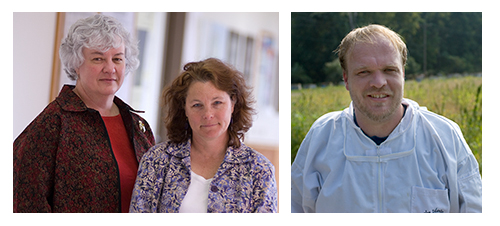
Cox-Foster and VanEnglesdorp
Source – Pennstatenews.com

Researchers see human factors contributing to this loss of bees. Cox-Foster and VanEnglesdorp cite poor nutrition, pesticide exposure, stress-related viruses, and fungicides as factors influencing colony collapse. In order to slow the collapse of bee colonies and ensure agricultural pollination, Cox-Foster and VanEnglesdorp assert that beekeepers need to act quickly to minimize disease and ensure good nutrition and less exposure to pesticides for their bee colonies. Farmers too should decrease their use of harmful pesticides and herbicides, so bees can survive and help maintain a food supply for both humans and bees.

Bee Movie illustrates just a glimpse of what the lack of pollination might cause, not because bee colonies have been destroyed by human farming techniques but because bees go on strike. By elucidating this connection between bees and humans, the film also reinforces the need for interdependent relationships between humans and bees, relationships that draw on both organismic and chaotic approaches to ecology. The film tells this tale of interconnection between human and non-human nature through the eyes of Barry.

The movie also demolishes the general notion that everything in this planet has been created for prioritized consumption by man. This is implied in the opening argument lines of the lawyer of the honey companies that “it is a man’s divine right to benefit from the bounty of nature God put before us”. This concept presupposes that creations other than man have only a passive role in the maintenance of equilibrium of life in nature. Vanessa stands as a contradiction to the lawyer when she tells her tennis friend, Ken “why does a bee’s life have less value than a human life?”. The reality is that mankind’s survival itself would be under threat if he remains oblivious to the contribution of other creatures in the maintenance of a harmonious ecological equilibrium. This point has been made crystal clear in this movie. No bees mean no pollination, no vegetables, no fruits and ultimately no food for living beings to consume and survive.

The movie is a great eye-opener to those who neglect the cycle of nature. Life on this earth can never be linear. Everything is a participant in the circle of life. In nature an unexpected action or behaviour of one species may lead to disastrous consequences for many other species. Nothing can stand alone. A loose and carelessly placed stone will result in the crumbling of the pyramid. We need each other for a harmonious co-existence.


A Nobel Prize Winning Initiative

“A girl child is a burden to the family” is a common phrase that one would hear come out of the mouths of backward minded people. In a growing world that is moving fast on technology and science, some people are still stuck with barbaric thoughts that don’t fit in today’s world, where education and awareness is available to everyone. Many people still believe that a girl child causes more harm than good. This belief is mainly prevalent in patriarchal countries like India, Pakistan, China, etc. The biggest reason for this belief is the dowry system. Dowry system in India and Pakistan is a system where the family of the bride pay huge amounts of money to the groom at the time of her marriage. This practice, which started out with good intention, is now a huge problem in this country and has led to a lot of social evil. Other factors that lead to female infanticide are poverty, lack of awareness, birth to unmarried women, birth of deformed children etc.

Piplantri Village Sign
Source : Google Images

In a country where female infanticide is still prevalent, a small village in Rajasthan celebrates the birth of the girl child. Piplantri is a village situated in the southern Rajasthan District of Rajsamand. In this village, the birth of a girl child is celebrated with the planting of 111 trees, which has greatly improved the quality of life in this small village. All this is possible due to one man, Shyam Sunder Paliwal.

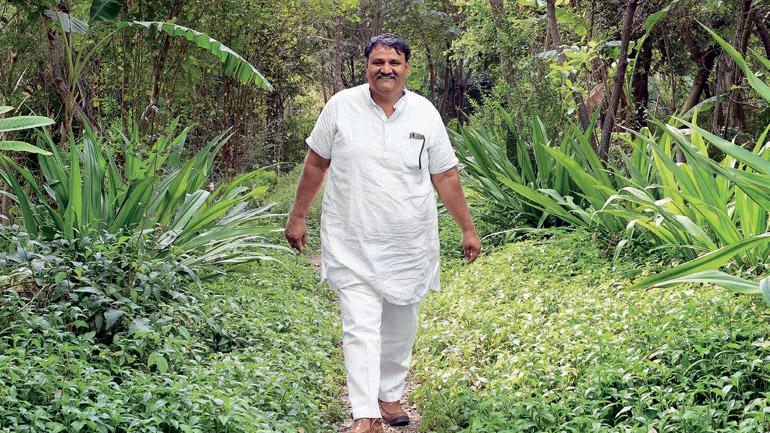
Shyam Sunder Paliwal is a social campaigner and ex-sarpanch (head of the village) of Piplantri village, who envisioned a bright future for the girls. He started this initiative in the memory of his late daughter Kiran, who died in 2006 – a tragedy he marked by planting the burflower tree, as it symbolises sublime love. He went on to channel his grief into a remarkable mission.

“She meant so much to me. How could parents kill a baby girl in the womb?

He knew what used to happen in Piplantri when a baby girl was born. A family member would push a hard, jagged grain into her mouth. That would generally be enough to start an infection that led to the baby’s death.

Shyam Sunder Paliwal
Source : Google Images

When in an interview he was asked about the inspiration for his noble cause, he said “August 21, 2006, was the saddest day of my life, when my daughter Kiran, 16, returned from school with stomach pain. Despite been taken to hospital, she could not be saved. It was a terrible loss. But I decided my daughter shall stay with me forever. I also decided that each person in the village shall feel the pride to be a parent of a daughter.”

He started ‘Kiran Nidhi Yojna’, according to which, whenever a girl child is born in the village, 111 trees are planted and financial aid is given to the family of the child. The parents of the newborn are made to sign a document and take a pledge of providing complete formal education to their daughter, and that they will not marry her off before she has attained the legal age of marriage. Under the policy, the family receives 2,500 rupees on her birth and the same amount on her first birthday. This is doubled to 5,000 rupees if she finishes class five and class eight. When girls finish class 12, they get 35,000 rupees, making an overall total of 50,000 rupees.

“It gives the family financial security. In return, they pledge to look after the trees, send her to school, and not marry her off before the legal age of 18,” says Paliwal.

The oath that the parents take and sign includes the following conditions:

  1. No one from my family will be involved in foeticide.
  2. The 111 trees planted on the birth, and the girl child will be raised with equal care.
  3. I will not keep my daughter from getting educated.
  4. I will not allow child marriage of my daughter under any condition.
  5. I will spend this money on my daughter’s wedding and/or higher education.
  6. The trees planted at birth will be the property of the village.
The Girls of Piplantri
Source : Google Images

Since 2006, 111 trees have been planted for each of the 65-70 baby girls born in the village every year. With this not only has the population of girl children gone up, but also the number of trees which has dramatically altered the biodiversity in the region. Piplantri lies on the semi-arid land of Rajsamand district in India’s Rajasthan state. This area was constantly plagued with drought, due to the extensive mining in this village which caused deforestation and turned this place into a desert with lack of water and vegetation. But all this has changed since the initiation of this scheme, which has now turned this village into an oasis.

Products of Piplantri
Source : Google Images

The trees are taken care of by the kith and kin of the girls and they also provide a source of revenue for the villagers. The villagers, in order to save the trees from termites, have planted over two millions plants of Aloe Vera. They later came to know that aloe vera has considerable value in the urban markets and now the women of the village produce and market aloe vera gel, juice and pickle. Some of these women earn up to Rs. 6,000 a month. These aloe vera plants, rose plants and many other such plants and fruits have helped in generating employment for the people of Piplantri. 

What started off as planting a tree for his daughter and urging fellow villagers to celebrate their daughters, has now caused a chain reaction which has dramatically altered this tiny village.

“For me, everything is linked: the girl child, the land, water, animals, birds, trees. I seek immortality through these trees”, says Paliwal

The villagers’ mindset has undergone change. No longer are they afraid of giving birth to female children. The villagers are proud of, and cherish their daughters and believe that with proper education, a girl can do anything a boy can. There is now a sense of gender equality in the village. The women of the village also have their own financial independence through the products they manufacture and sell.

Children of Piplantri tying Rakhis
Source : Google Images

During Raksha Bandan, an annual Indian ceremony between siblings, the villagers tie threads or Rakhis around the trees and nurture them. The trees are a part of their family and they all take care of them. This village is a true symbol of eco-living where man and nature co-exist in beautiful harmony. Paliwal has also started other initiatives to preserve and conserve water and around 1800 check dams have been constructed in the village. He has also promoted ‘Open Defecation Free India’ project in his village.

The planting programme not only gave professional opportunities to many people, it also improved families’ conditions, and allowed the extraction of medicines. The perception of the female figure has positively changed, and now the village has an alcohol-free status and crimes have dropped. The socio-economical upliftment of Piplantri is the live testimony of how a cause can change the entire outlook of a society.

Source : Google Images

I honestly feel this is a Nobel prize winning initiative because it has not only dramatically changed the lives of the people of Piplantri, but it has also greatly affected the nature of this region. Shyam Sunder Paliwal and the people of the village have developed a thriving ecosystem and the methods adopted can be used in other parts around the globe. This model can be implemented to fight against deforestation, water scarcity and also the fight against extinction of species. Urbanisation has taken its toll on nature and that has a massive impact on all of us. If the small population of this village were able to create a great change, imagine how much can be done if the entire human population took similar steps to protect and sustain the environment. I feel Shyam Sunder Paliwal deserves a Nobel prize for this initiative and he is proof of how a small action can have a deep and lasting impact.

Blog at WordPress.com.

Up ↑

Design a site like this with WordPress.com
Get started